Camper Life SVG Cut File
As a designer who’s stitched over 300 custom embroidery projects—from boutique aprons to Etsy best-selling baby onesies—I opened the Camper Life SVG Cut File with one question: “Will this hold up in real life, not just on screen?” Not as a decorative graphic, but as a machine embroidery design that lands cleanly on fabric, reads clearly at 4 inches wide, and feels authentic enough for someone to pay $42 for a handmade tote bag featuring it.
A First Impression That Feels Like Home
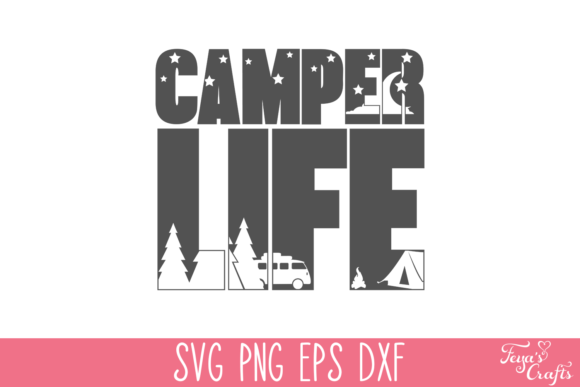
The Camper Life SVG Cut File lands with quiet confidence—not loud, not fussy. It’s a clean, friendly quote layout: “Camper Life” centered, often with subtle camping icons (tent, pine tree, or trail marker) tucked in as visual punctuation. No excessive swirls, no thin serifs that vanish under satin stitch. The letterforms have gentle weight and open counters—critical when translating from vector to thread. As a graphics file meant for crafts, it doesn’t try to be everything. It knows its lane: relaxed, grounded, outdoorsy warmth. That makes it instantly useful for small shop products—think linen tea towels for a mountain lodge gift shop, or softshell jackets for a local outfitter’s merch line.
Where It Shines—and Where It Needs Care
I tested a mockup of the Camper Life SVG Cut File on a medium-weight cotton twill tote bag first. Stitched cleanly at 3.75" wide with 40-weight poly thread and tear-away + cut-away stabilizer blend, the text read clearly even from six feet away. The spacing between letters held; no crowding, no awkward gaps. That’s huge for custom apparel—especially sweatshirt embroidery, where dense fill stitches can blur tight kerning.
It also translated beautifully to an embroidered patch. Because the original vector is well-constructed (no overlapping paths or stray anchor points), digitizing it for applique design was straightforward—no cleanup needed before sending to my embroidery software. The result? A crisp, professional patch with consistent satin stitch borders and balanced fill stitch density. Perfect for camp-themed nursery decor or a vintage-style denim jacket.
But here’s where attention matters: on baby embroidery, I’d avoid using the smallest version (<3") without testing. Some versions include tiny icon details—like a miniature compass rose—that may not resolve cleanly below 2.5". On stretchy fabric (think ribbed knit onesies), I’d add lightweight fusible interfacing *under* the stabilizer to prevent puckering around curved letter edges. And on dark fabric? Confirm the thread colors you choose actually pop—this isn’t a high-contrast design by default, so a charcoal grey thread on navy won’t read. Always test the Camper Life SVG Cut File in black-and-white mockups first to gauge value separation.
Fabric & Form: What Works, What Doesn’t
The Camper Life SVG Cut File breathes best on stable, medium-to-heavy fabrics: canvas, duck cloth, brushed cotton, fleece-backed sweatshirts, and structured caps. On thin fabric like voile or lightweight rayon, the fill stitch density (if digitized densely) can cause show-through or stiffness—so adjust underlay and reduce density if converting it yourself.
Curved surfaces—like the front panel of a structured cap—require careful placement. The horizontal layout works, but avoid placing it too close to the seam or bill curve. I’d recommend centering it slightly higher than usual to keep the full phrase visible and legible. For holiday embroidery or wedding gifts (yes—it’s been used on rustic “glamping” invites and couple’s camping blankets), pair it with simple running stitch borders or minimalist foliage motifs—not competing elements.
Why It Builds Trust—Not Just Texture
Customers don’t buy embroidery files. They buy confidence: that the finished product will look intentional, not rushed. The Camper Life SVG Cut File supports that. Its clean lines and balanced proportions signal craftsmanship—even before stitching begins. When used on personalized gifts (like a custom embroidered pillow cover for a friend’s new Airstream), it feels thoughtful, not templated. That perception lifts perceived value, especially for Etsy sellers pricing handmade products at premium tiers.
For craft business owners building brand consistency, this design slots neatly into a cohesive aesthetic—no rebranding required. It pairs naturally with earthy thread palettes (olive, burnt sienna, slate blue) and complements other outdoor-inspired design assets without clashing. And because it’s delivered in SVG, EPS, PNG, and DXF formats, it’s flexible: use the SVG for Cricut-based iron-on transfers, the DXF for laser-cut wood signs, the PNG for printable mockups—all while keeping embroidery as the core use case.
Designer Notes You’ll Actually Use
- Always stitch a test piece—on your exact fabric + stabilizer combo—before cutting into client or inventory fabric.
- Check licensing before selling finished items or bundling the Camper Life SVG Cut File into digital embroidery bundles. Crafts and Graphics categories vary widely in commercial terms.
- Review stitch density in your embroidery software—if it’s over 12,000 stitches for a 4" version, consider simplifying small icons or adjusting underlay.
- Confirm hoop size compatibility: the design’s width should comfortably fit within your most-used hoop (e.g., 4x4 or 5x7) with ¼" margin.
- Inspect corners and joins: look for sharp angles or intersecting paths that could cause thread breaks or jump stitches on older machines.
- Use proper stabilizer: medium-weight cut-away for knits, tear-away for stable wovens, and hybrid for textured fabrics like terry cloth towels.
- Compare light/dark backgrounds in mockups—not just for contrast, but for how the phrase’s rhythm reads across tone shifts.
In short: the Camper Life SVG Cut File isn’t flashy—but it’s reliable. It’s the kind of embroidery file that disappears into the product, letting the handmade quality and intention shine through. Whether you’re prepping for a craft fair, building an Etsy shop’s seasonal collection, or fulfilling a custom request for embroidered kitchen towels, this one earns its place in your working library. Just remember: great embroidery starts with smart file choices—and ends with confident, stitch-perfect execution.