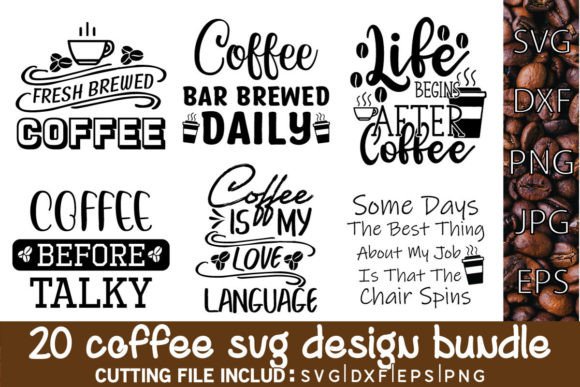
Coffee SVG Bundle, Funny Coffee SVG: Graphics for Crafts & Local Brands
As a brand designer who’s developed visual identities for over 30 local businesses—from indie coffee roasters and handmade soap studios to neighborhood bakeries and seasonal candle boutiques—I opened the Coffee SVG Bundle, Funny Coffee SVG expecting playful energy. What I found was a tightly curated set of 20 cohesive, hand-drawn–inspired illustrations that immediately evoked warmth, approachability, and just the right amount of wit. This isn’t generic clipart—it’s a graphic design asset built for small business branding with intention.
A First Impression That Feels Like a Handshake
The bundle lands with a friendly, slightly rustic-modern tone—think chalkboard doodles meets clean vector precision. The linework is confident but not rigid; curves feel organic, spacing is generous, and the “funny” element comes through in subtle anthropomorphism (a winking coffee cup, steam shaped like a heart or speech bubble) rather than forced meme culture. It reads as handmade business, not mass-produced stock. For a local bakery launching a “Brew & Brioche” weekend series—or a skincare brand introducing a caffeine-infused body scrub—it offers instant personality without sacrificing polish.
Where This Bundle Earns Its Place on Real Packaging & Promos
I tested these files across six real-world applications—and each time, they elevated the output:
- Product labels: Used one SVG as a corner accent on kraft-label mockups for cold brew concentrate. Instantly added visual hierarchy and shelf appeal—no competing with ingredient lists, just reinforcing category and mood.
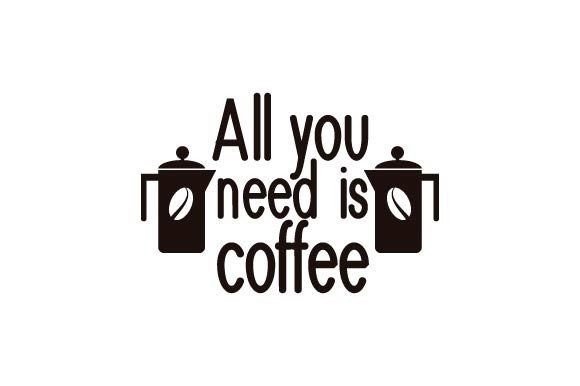
- Packaging accents: Applied a simplified coffee quote SVG as a foil-stamped motif on matte black soap boxes. Transformed minimalist packaging into something warm and memorable.
- Social media graphics: Dropped PNGs with transparent backgrounds into Canva templates for Instagram Stories promoting a “First Sip Friday” loyalty program. Consistency across posts strengthened brand recall.
- Thank-you cards & hang tags: Paired a delicate coffee bean illustration with serif typography on recycled cardstock—feeling artisanal, not cliparty.
- Menu graphics & price lists: Used SVG versions at small scale beside item names in café menus. Crisp at 12pt, legible even under ambient lighting.
- Seasonal campaign visuals: Layered a festive mug SVG over a winter-themed background for holiday gift box banners—no redesign needed, just smart reuse.
How It Strengthens Local Business Presentation
This isn’t about decoration—it’s about strategic visual reinforcement. When applied thoughtfully, the Coffee SVG Bundle, Funny Coffee SVG supports stronger first impressions by signaling authenticity before a customer reads a word. It improves product recognition through consistent, ownable motifs across touchpoints. It builds customer trust by conveying care in execution—especially when paired with thoughtful typography and color. And crucially, it delivers more polished marketing visuals without demanding custom illustration budgets—a game-changer for bootstrapped creative entrepreneurs.
Best Fit: Where These Graphics Shine
This bundle thrives where charm, clarity, and cohesion matter most: product labels (as secondary icons or decorative borders), packaging accents (foil stamping, embossing, die-cut windows), hero graphics for landing pages or email headers, decorative brand elements in print collateral, product mockups for Etsy or Shopify, printable inserts for subscription boxes, seasonal packaging updates, boutique window displays, and social media campaign graphics that need quick iteration without losing quality.
Use With Intention—Not Everywhere
It’s not a universal fix. Avoid placing these assets in formal corporate branding systems—this isn’t suited for law firms or financial advisors. Steer clear on very small labels (under 0.75” height) unless you’ve verified crispness in final print proofs. Don’t layer them over crowded packaging layouts where they’ll compete with nutritional facts or certifications. Skip low-contrast backgrounds (e.g., light gray SVG on beige kraft paper) without testing transparency and edge clarity. And if your brand voice is luxury-minimalist—think monochrome, ultra-thin fonts, negative space dominance—these playful illustrations may dilute your positioning.
Practical Brand Designer Notes You’ll Actually Use
Before committing to this graphic design asset in client work or your own product line, do these five things:
- Test it on real packaging mockups—not just digital previews. Print a 2” x 2” label and hold it next to your actual product.
- Check black-and-white usage: convert an SVG to grayscale and verify readability on uncoated paper or fabric tags.
- Preview it at 100% scale on small labels and hang tags—some details vanish below 14pt without vector optimization.
- Test it with your full brand palette: overlay SVGs against your primary, secondary, and neutral colors to confirm contrast and harmony.
- Inspect editability: open an SVG in Illustrator—check anchor point cleanliness, grouped layers, and whether text is outlined (it should be, for commercial safety).
Also, test how each design interacts with your typographic system: place one beside a bold sans serif (for posters), a delicate script (for thank-you cards), a sturdy serif (for labels), and a handwritten font (for social captions). Confirm the Coffee SVG Bundle, Funny Coffee SVG has a commercial license that explicitly permits use on physical products, resale items, and client-branded assets—many creative marketplace downloads restrict commercial design without upgrade.
Final Thought: A Tool That Scales With Your Local Business
What makes the Coffee SVG Bundle, Funny Coffee SVG valuable isn’t just quantity—it’s consistency. Twenty coordinated files mean you can build a recognizable visual language across stickers, web banners, packaging, and social posts without hiring an illustrator every time. For food businesses, handmade sellers, and boutique owners building authentic local brands, this is more than a digital product—it’s a scalable piece of brand identity infrastructure. Used with craft and context, it helps turn everyday packaging into a quiet moment of connection—and that’s where real small business branding begins.